

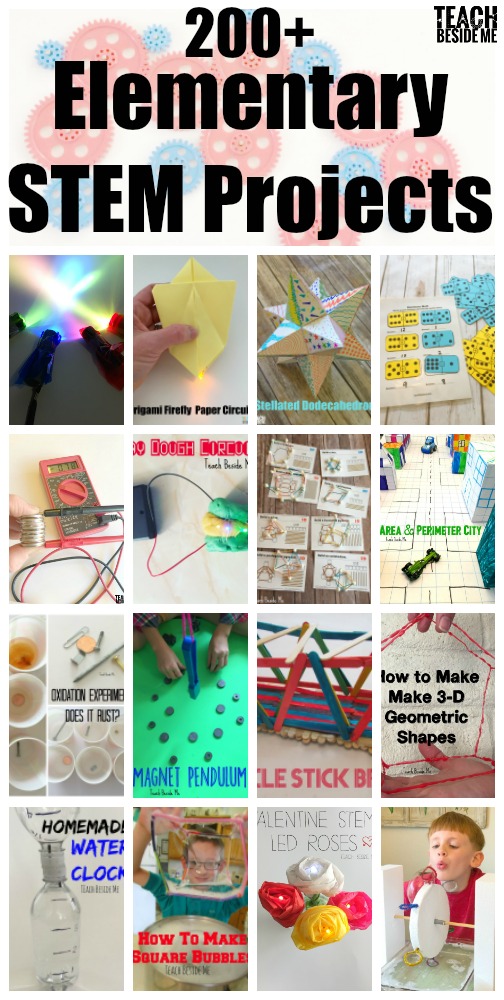
Looking for simple, engaging ways to teach science, technology, engineering, and math? You’re in the right place! This giant list of 200+ Elementary STEM Projects is packed with hands-on activities kids love. These ideas turn everyday materials into exciting experiments that spark curiosity, creativity, and real-world problem-solving. Whether you teach in a classroom or homeschool around the kitchen table, you’ll find STEM challenges, engineering builds, and science explorations that make learning come alive. Get ready to experiment, invent, and discover — one project at a time!
What Is an Elementary STEM Project?
An Elementary STEM project is an activity designed for elementary-aged children (K-5) that blends science, technology, engineering or math with hands-on exploration.
In this post, I have divided up my posts into each of those categories, but many of the ideas overlap with multiple STEM learning categories. STEM activities for kids are learning activities that implement one or more of those educational categories to teach kids real world skills and ideas. These projects are fun, hands-on and engage their minds in many ways.
Why Are Hands-On STEM Projects Valuable for Young Learners?
Hands-on STEM projects are more than just fun experiments — they’re the foundation of how kids learn to think like scientists and engineers. When children explore, build, test, and adjust, they’re doing real scientific work at their own level.
Here’s why these kinds of projects matter so much:
-
They connect learning to real life. Kids see that science, math, and engineering aren’t just subjects in a book — they’re everywhere in the world around them.
-
They build curiosity and confidence. Children learn to ask questions, take risks, and experiment without fear of being wrong. Every mistake becomes a discovery.
-
They strengthen problem-solving skills. STEM projects teach kids to plan, test ideas, gather data, and improve their designs — skills they’ll use in every part of life.
-
They develop persistence and creativity. When kids test a design or repeat an experiment, they practice perseverance. They also learn there’s often more than one “right” solution.
-
They integrate multiple subjects. One project might combine science and art, or math and technology, helping kids see how knowledge connects across disciplines.
-
They promote teamwork and communication. Many STEM challenges are collaborative, giving kids the chance to share ideas, negotiate, and learn from each other.
-
They prepare children for the future. STEM education builds the critical-thinking and design-thinking mindset that underlies future careers — but more importantly, it teaches kids how to learn.
STEM Teaching Tools
There are so many amazing STEM teaching tools available these days. I want to highlight a few that I have been involved in.
A few years ago I helped co-author an amazing book called STEAM Kids that has turned into a great series. There are now also STEAM Kids Valentines Day, STEAM Kids Christmas and STEAM Kids Halloween books, with the STEAM Kids in the Kitchen version coming soon!
Last year I also wrote a Summer Science Camp e-book with 5 days of lesson plans.
I have two books that integrate math and art as well as science and art: Math Art and Drawing Games for Kids , Science Art and Drawing Games for Kids. These books put the A into STEM / STEAM!
STEM ideas often incorporate simple ingredients and supplies such as toothpicks, straws, baking soda and vinegar. You’ll see things like a balloon-powered car, egg drop challenge, lava lamp, crystals, marble runs and more! They are more than you average science projects, because they typically bring together multiple aspects of learning.
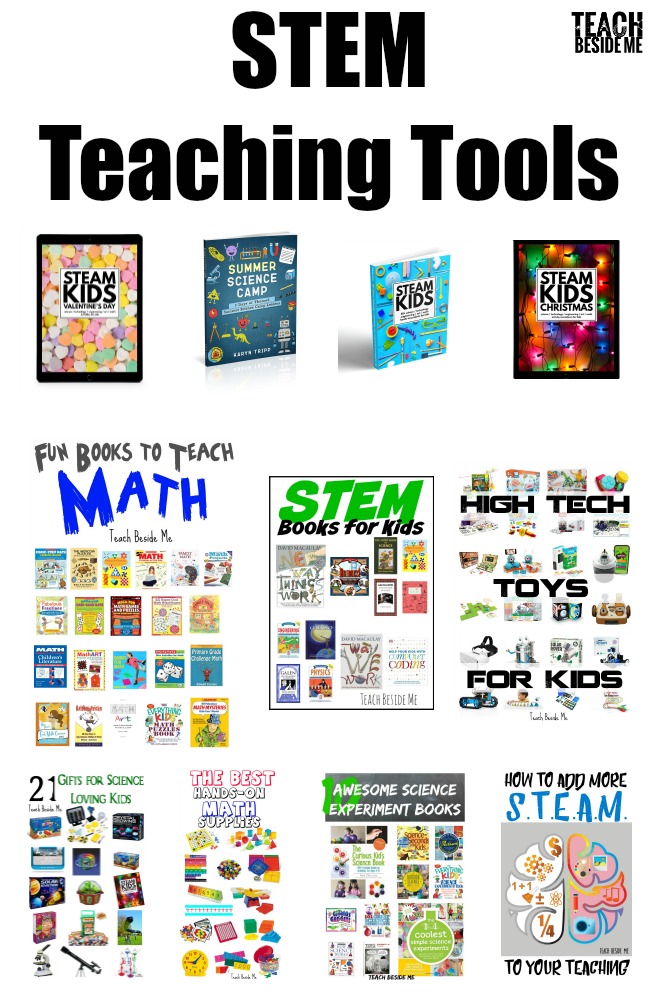
I also have some posts with ideas and tools for teaching the STEM/ STEAM subjects in your classroom or home.
- How to Teach STEAM
- STEM Books for Kids
- High-Tech Toys for Kids
- Best Science Experiment Books for Kids
- Best Hands-on Math Supplies
- Fun Books to Teach Math
- Science Gifts for Kids
How to Get Started With STEM at Home or in the Classroom
Starting STEM learning doesn’t have to be complicated — or expensive. The best projects begin with simple materials, a curious question, and time to explore.
-
Choose a question to investigate.
Pick something your kids are naturally wondering about — Why does salt make ice melt? Can I build a bridge that holds more weight? Curiosity is the starting point for every great experiment. -
Use what you already have.
You don’t need a fancy kit or lab supplies. Cardboard, tape, straws, recyclables, and household items are perfect for testing ideas and engineering solutions. -
Encourage creativity over perfection.
Real scientists fail and redesign constantly — and that’s the fun part! Let kids sketch ideas, test them, and make improvements. -
Ask open-ended questions.
Instead of giving answers, ask “What do you notice?”, “What might happen if we change this?”, or “How could you test your idea?” These prompts lead to deeper thinking. -
Reflect together.
After completing a project, talk about what worked, what didn’t, and what could be tried next time. Journaling, drawing, or sharing aloud all help reinforce learning.
By making exploration part of your daily or weekly routine, STEM becomes a natural part of how your children see and understand the world.
Now let’s get to some fun STEM project ideas! I have a lot of STEM projects on my site, so I have divided them up by the basic STEM categories. Many of them overlap in multiple categories, but I picked the main one for these pages. Hopefully this makes it easier for you to find what you need for your lessons!
Science STEM Projects:
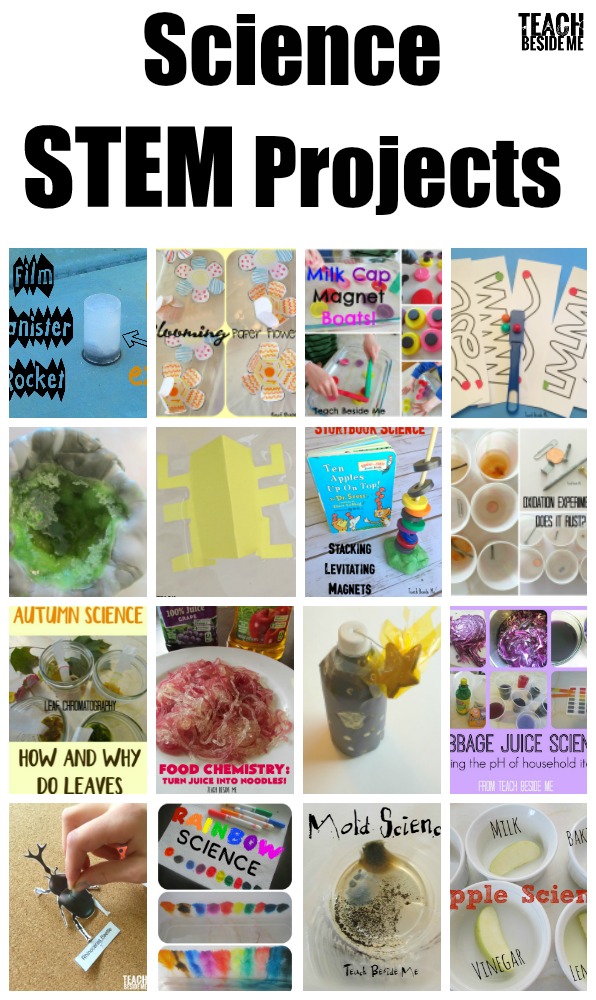
Following are some cool science activities for younger kids. Oh, you know, just a few… We like science around here.
Oil Spill Clean-Up Science Experiment
Storybook STEM: If I Built a Car
Storybook STEAM: Inkblot Cloud Shapes
Oxidation Experiment: Does it Rust?
Storybook STEM: Levitating Magnets with Ten Apples Up on Top
Magnet Pendulum (also see my post with 40+ Magnet Teaching & Play Ideas!)
Fabric Printed Nature Matching Game
Food Chemistry: Turn Juice into a Solid!
Kitchen Chemistry: Cake Experiment
Winter Science: Fizzing Snowmen
Plate Tectonics with Kinetic Sand
Seashell Acid & Base Experiment
The Seeds We Eat: Seed Science
Fruit Enzymes Gelatin Experiment
Storybook STEM: The Magi Ear Trick with The Ear Book
Geology Experiment: Stalactites and Stalagmites Formation
Food Science: Green Eggs Chemistry
Shrunken Heads Halloween Science
Old Faithful Geyser Experiment
Autumn Science: Squash Comparisons
Sedimentary Rocks and Fossils Project
Apple Science- How to Prevent Browning
Technology STEM Projects:
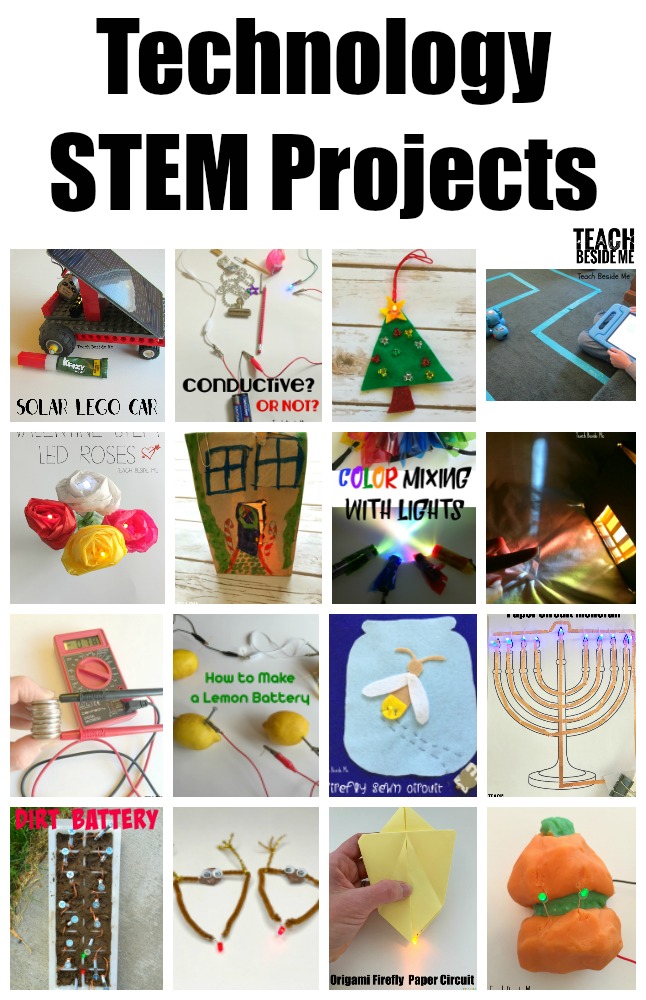
Add some technology into your learning with these awesome Technology-focused STEM projects and activities for kids
Gingerbread House Paper Circuits
Soft Circuit Christmas Ornament
Color and Light Experiments with a Light Box
Origami Firefly Paper Circuits
Engineering STEM Projects:

These engineering activities will get kids building and play and exploring. WE LOVE building activities, so I hope you find a great one that will inspire your students and kids.
Storybook STEM: 3 Billy Goats Gruff
Blueprints and Architecture Templates
Storybook STEM: Submarine Science with Papa’s Mechanical Fish
Ancient Science: Homemade Water Clock
Easy Bridge Engineering Experiment
Bubble Science: Square Bubbles
Math STEM Projects:
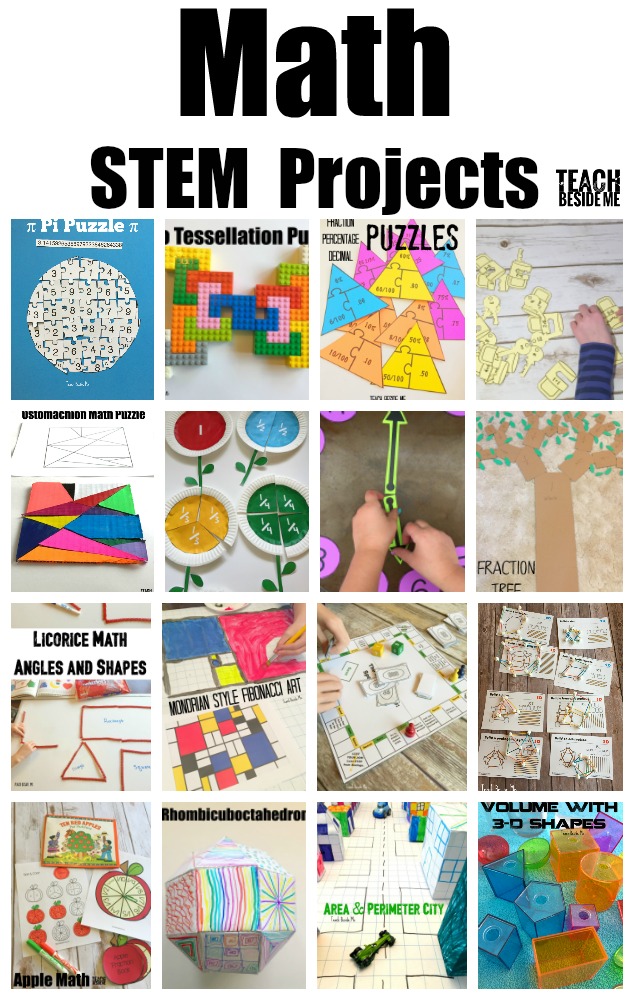 Math is a big deal around here. We like to make math interesting! Try some of these fun Math-focused STEM Activities with your learners.
Measuring the Volume of 3-D Shapes
Toothpick and Marshmallow Geometry
Groundhog Day Probability Game
Save the Snowman Learning Game
Fraction-Decimal-Percentage Puzzles
Storybook STEM: Each Orange Had Eight Slices
Storybook STEM: One Grain of Rice
Frequently Asked Questions
Q: What age range are these projects appropriate for?
A: Mostly K-5, but many projects can be adapted for older kids by increasing complexity or adding extension questions.
Q: Do I need special supplies for these 200+ projects?
A: No — most use everyday household items or inexpensive supplies. The idea is to make STEM accessible and fun.
Q: How often should we do STEM projects?
A: It depends on your schedule. Some parents/teachers aim for 1-2 per week; others rotate activities monthly. The key is consistency and reflection.
Q: Can these projects be used in group settings or mixed ages?
A: Yes! Many of the activities work well for mixed-age siblings or groups because you can scaffold the challenge based on age/ability.
Thanks for reading! I hope you find some STEM projects that will work for your teaching needs.
